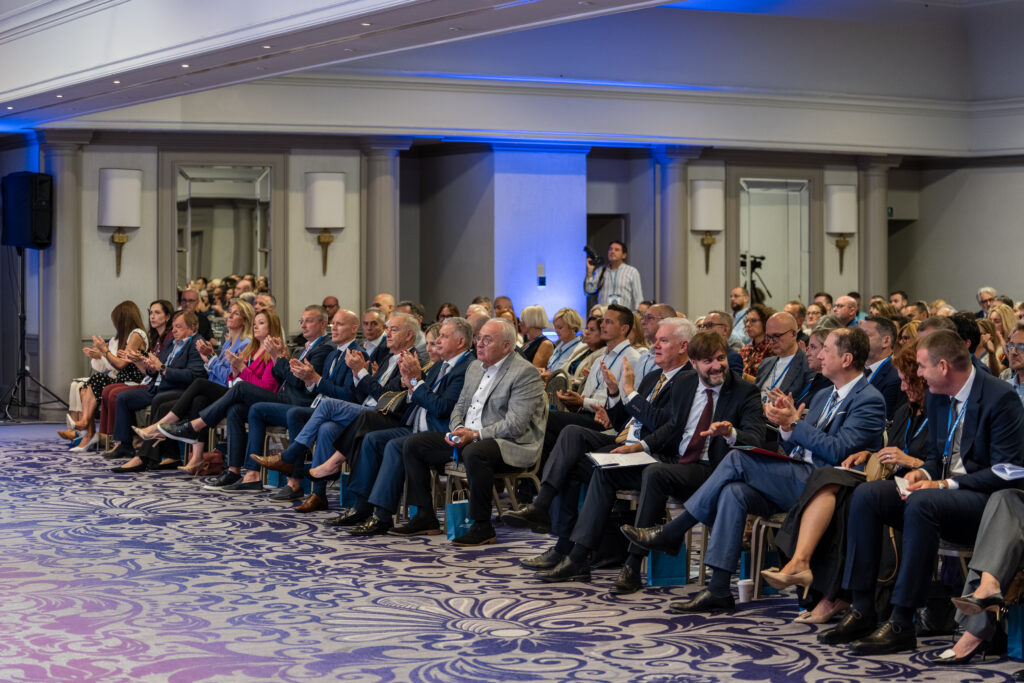
Conference: Croatia Business Risk Outlook 2027
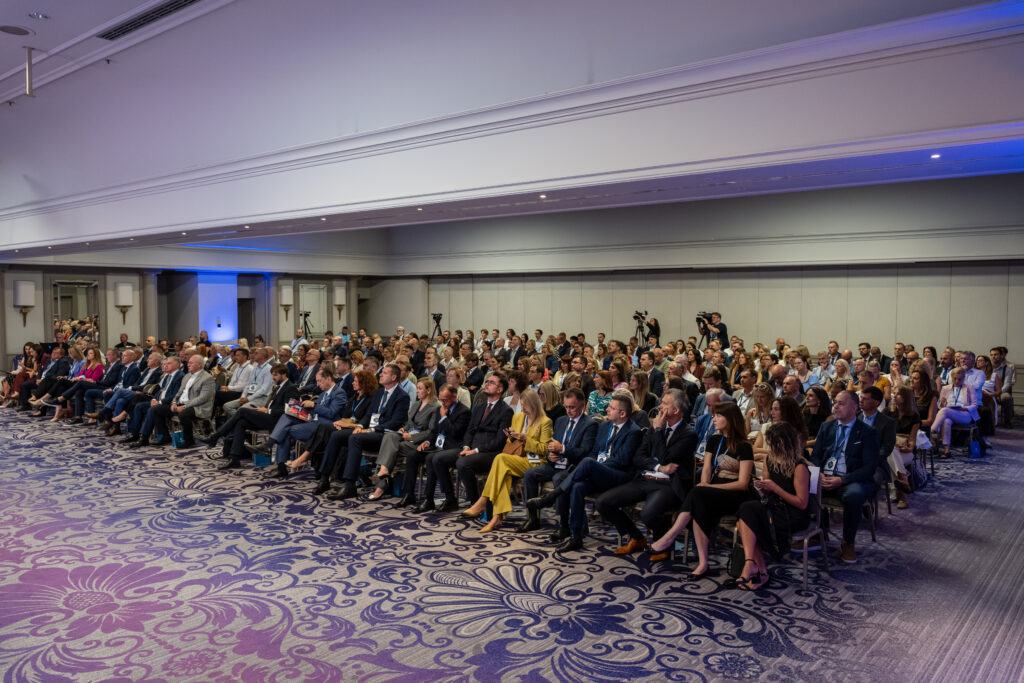
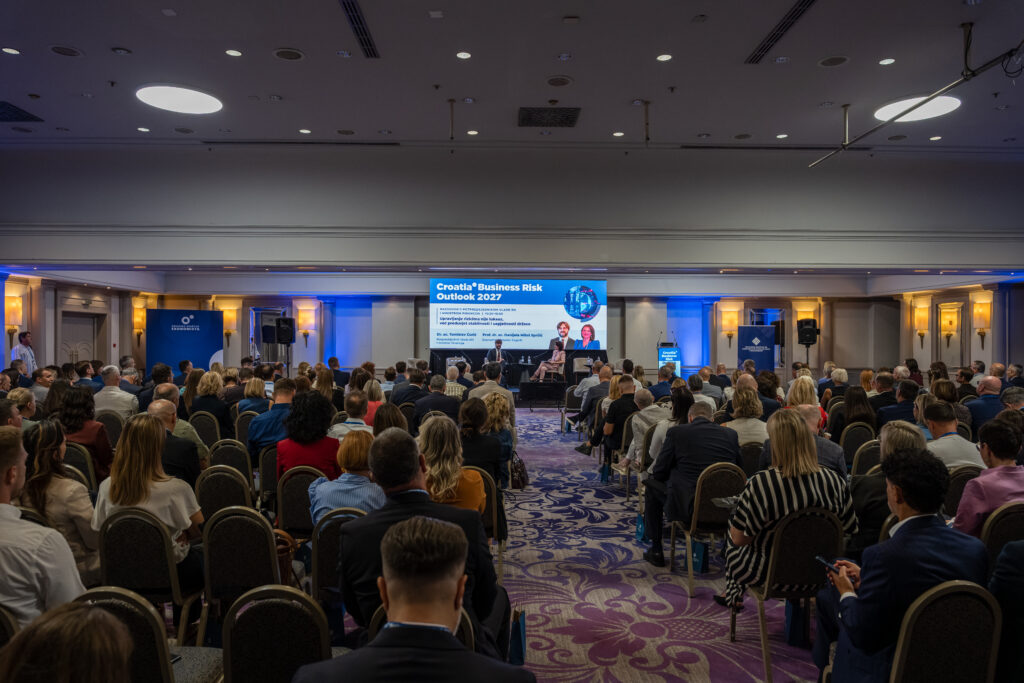
More than 300 representatives of leading Croatian companies, institutions, academia and the public sector gathered in Zagreb today for Croatia Business Risk Outlook 2027.
At a time when geopolitical, energy, technological, regulatory and cyber risks are becoming increasingly interconnected, the central question is no longer how to avoid uncertainty, but how to build organizations capable of making sound decisions even when the future cannot be reliably predicted. Croatia Business Risk Outlook was conceived as a meeting point for business experience, expert knowledge and strategic thinking on the challenges that will shape the economy and business environment in 2027.
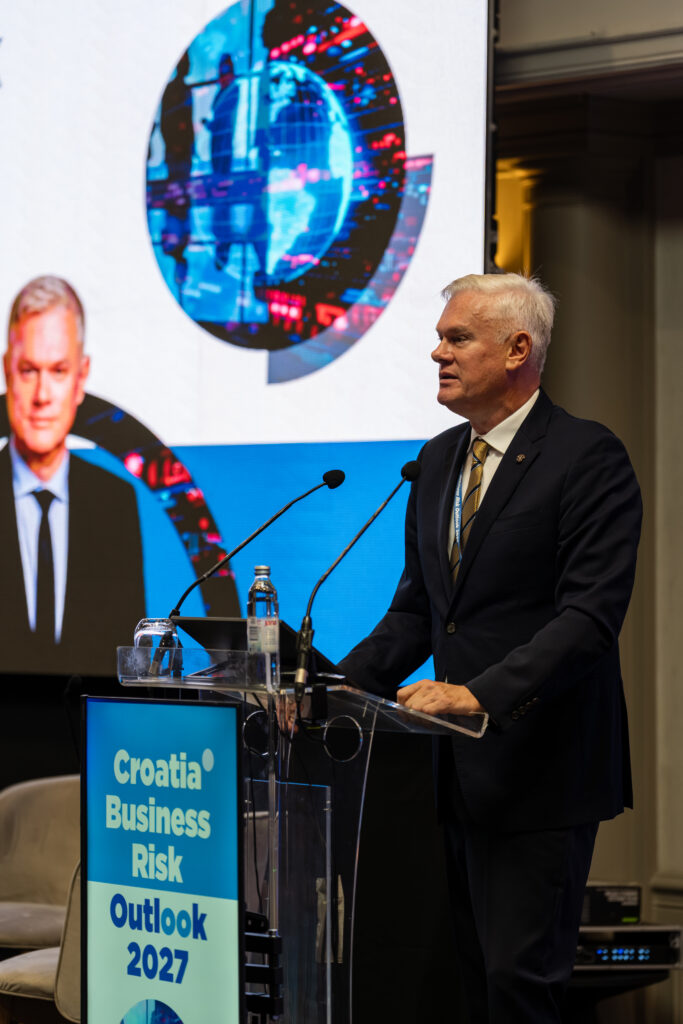
The conference opened with an inspiring keynote address by Prof. Darko Tipurić, PhD, President of the Croatian Corporate Governance and Management Society and The Croatian Economic Association, who pointed out that the boundary between risks that can be assessed and genuine uncertainty is constantly shifting. In such an environment, resilience does not stem solely from better risk assessment models, but from the quality of governance, the speed of adaptation, and an organization’s ability to recognize change in time and act before it develops into a crisis.
A broader perspective was offered by Prof. Danijela Miloš Sprčić, PhD, from the Faculty of Economics & Business, University of Zagreb, who in her opening presentation highlighted the need to move away from a fragmented approach to individual risks and towards an integrated system for managing risks, change and uncertainty. A key part of the programme was a discussion with Tomislav Ćorić, PhD, Deputy Prime Minister of the Republic of Croatia and Minister of Finance, moderated by Prof. Danijela Miloš Sprčić, PhD. The discussion demonstrated the extent to which fiscal stability, investment, competitiveness, the international environment and the state’s ability to respond to external shocks are closely connected to the resilience of the business sector.
The central part of the conference brought together the perspectives of leading Croatian companies on the challenges ahead in 2027. The first panel discussion featured Marko Ćosić, President of the Management Board of Đuro Đaković Group; Neven Vranković, Vice President of the Management Board of Atlantic Group; Ivana Čehulić, Member of the Management Board of NEXE Group; Prof. Hrvoje Šimović, PhD, Member of the Management Board of INA; and Prof. Slavko Vidović, PhD, of INFODOM and President of the Association for the Promotion of Smart Industries CroSI. The discussion was moderated by Prof. Darko Tipurić, PhD.
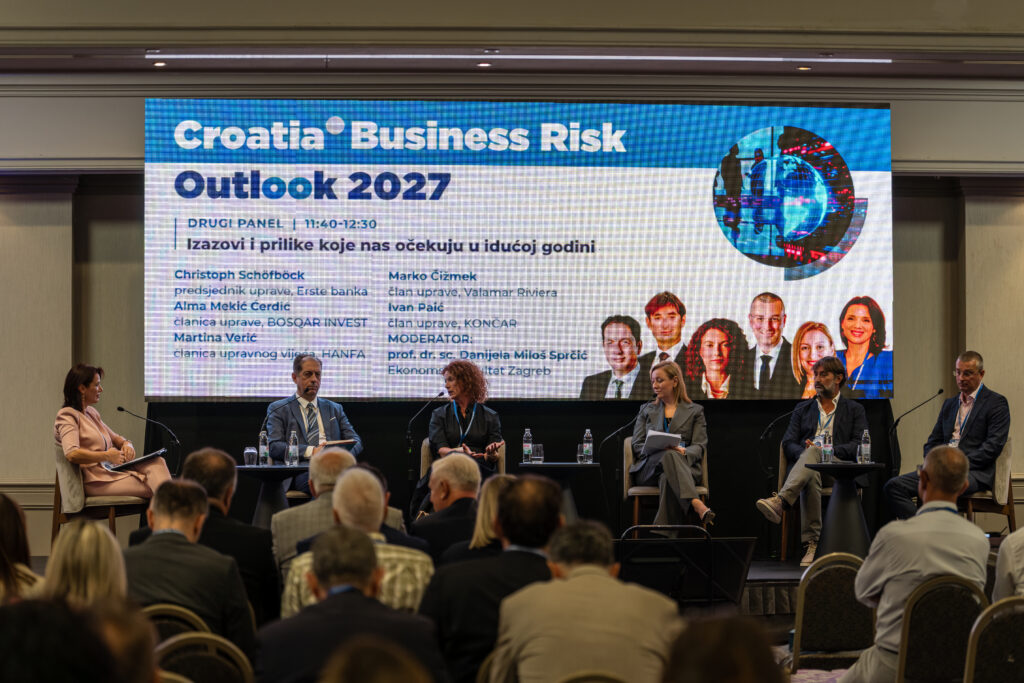
The second panel discussion brought together perspectives from the financial sector, tourism, industry, investment and regulation. Participants included Christoph Schöfböck, President of the Management Board of Erste Bank; Alma Mekić Ćerdić, Member of the Management Board of BOSQAR INVEST; Martina Verić, Member of the Management Council of HANFA; Marko Čižmek, Member of the Management Board of Valamar Riviera; and Ivan Paić, Member of the Management Board of KONČAR. The discussion was moderated by Prof. Danijela Miloš Sprčić, PhD.
The diverse experiences and perspectives of the participants led to a common conclusion: risk is no longer a separate issue that an organization addresses after strategic decisions have been made. Risk is an integral part of strategy itself. How companies understand uncertainty, assess the interdependence of threats and opportunities, and incorporate risks into their investment and development decisions will increasingly determine their competitiveness.
Risk management is therefore neither an administrative obligation nor a defensive function. It is an organization’s ability to preserve room for action even when circumstances are changing rapidly. Resilience is not built when a crisis occurs. It is built long before that – through sound governance, quality information, alternative scenarios, clear accountability and a readiness to make decisions under conditions of uncertainty.
We would like to thank all speakers, panellists, partners and more than 300 participants who made Croatia Business Risk Outlook 2027 a forum for open dialogue on the issues that will shape the future of the Croatian economy.
We cannot make the future completely predictable. We can, however, build organizations that are better prepared for it.