Conference: “From Signals to Strategy: Regulatory and Geopolitical Trends as a Source of Competitive Advantage”
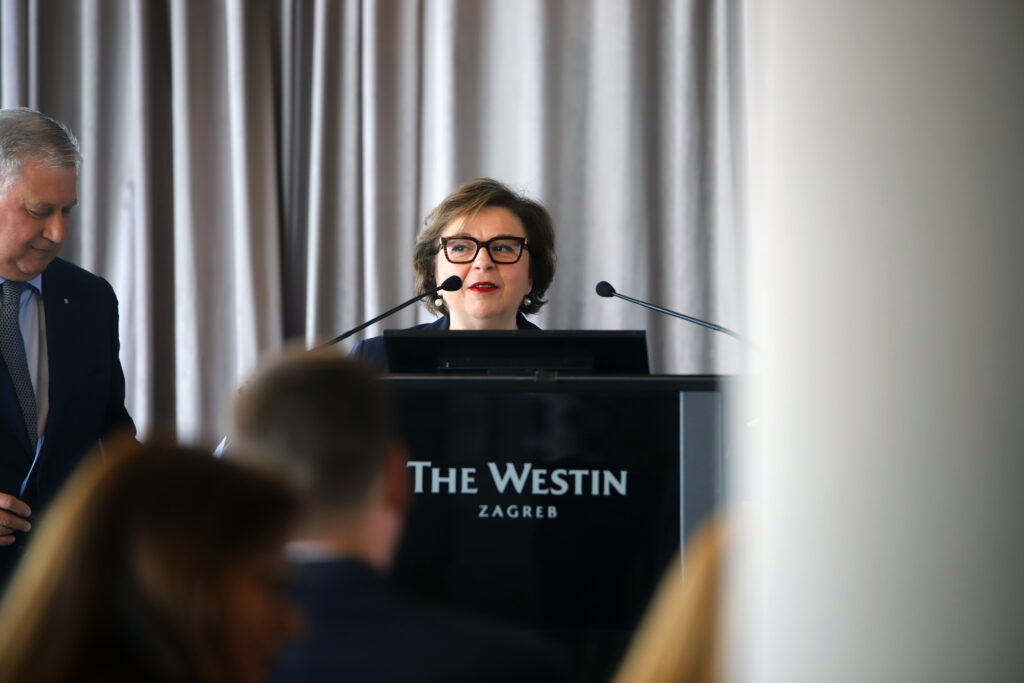
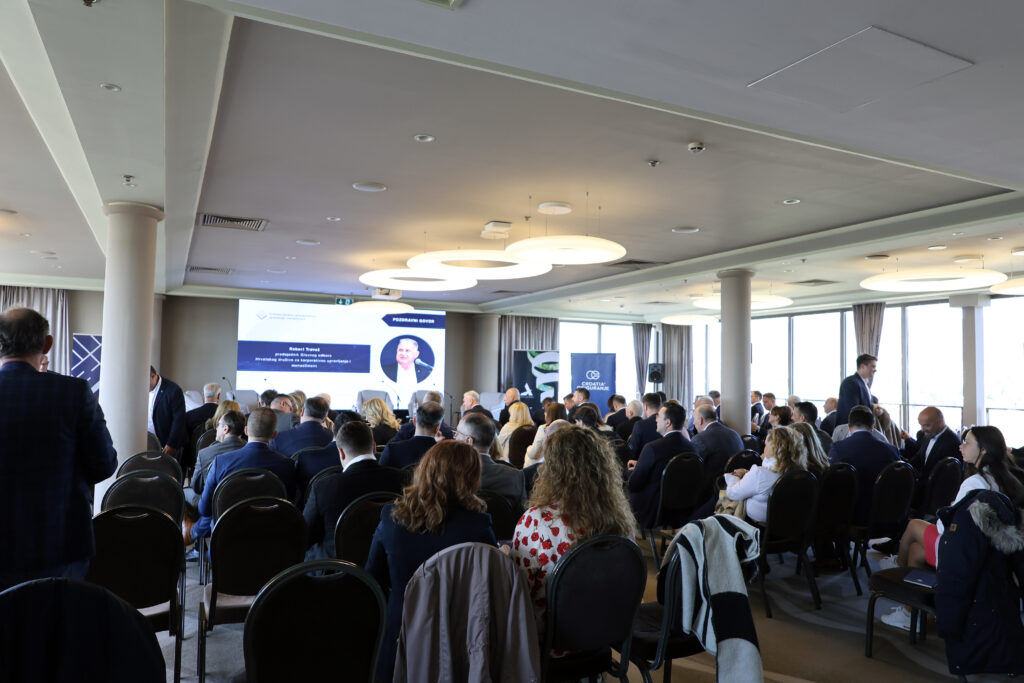
Croatian Corporate Governance and Management Society held a business roundtable titled “From Signals to Strategy: Regulatory and Geopolitical Trends as a Source of Competitive Advantage” on April 8, 2026, at the Westin Zagreb Hotel, bringing together leading domestic and international experts in the fields of energy, corporate governance, and geopolitical risk.
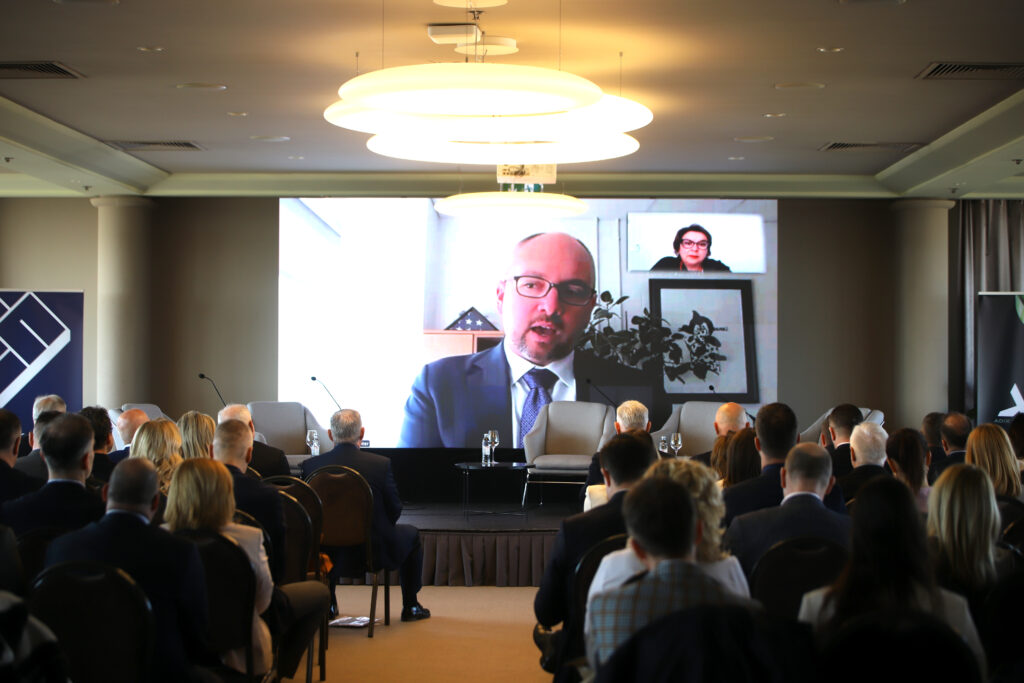
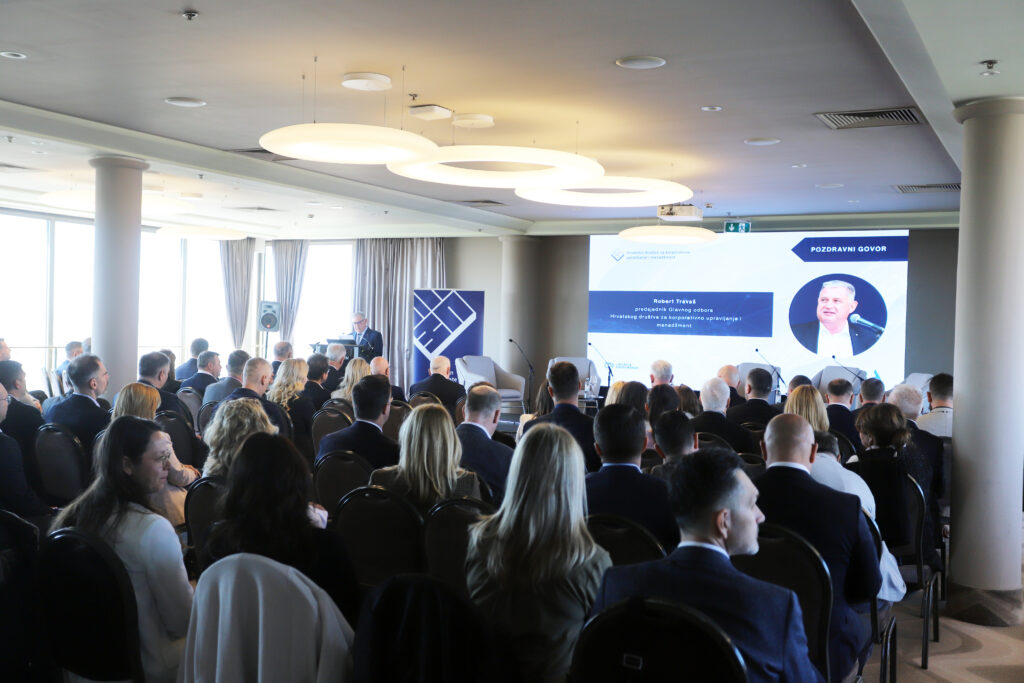
Following the opening remarks by Robert Travaš, President of the Executive Board of the Croatian Corporate Governance and Management Society, the introductory discussion was led by Landon Derentz (Atlantic Council) and Sabina Škrtić (Croatian Corporate Governance and Management Society). They emphasized that instability in the global order is becoming a permanent feature of the business environment, requiring new professional profiles—individuals who understand the broader picture and how political and regulatory dynamics affect business outcomes.
Domagoj Juričić, an advisor on political risk management, delivered a lecture titled “The End of Predictability: Why Political Risk Management Is Becoming a New Business Function,” concluding that what is not resolved at the diplomatic table quickly finds its way into corporate balance sheets.
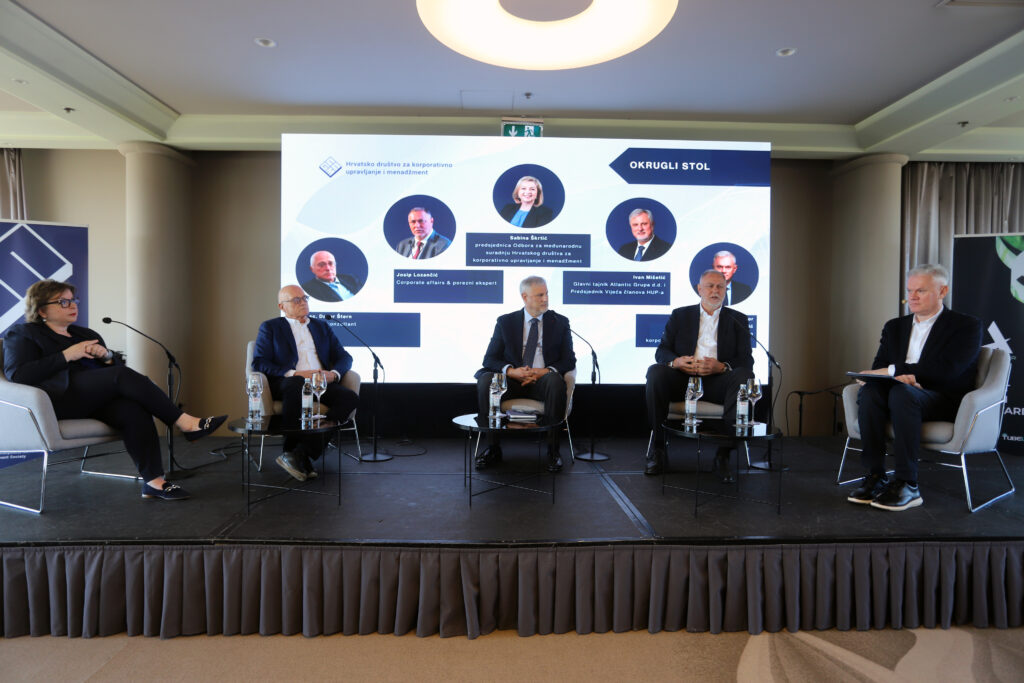
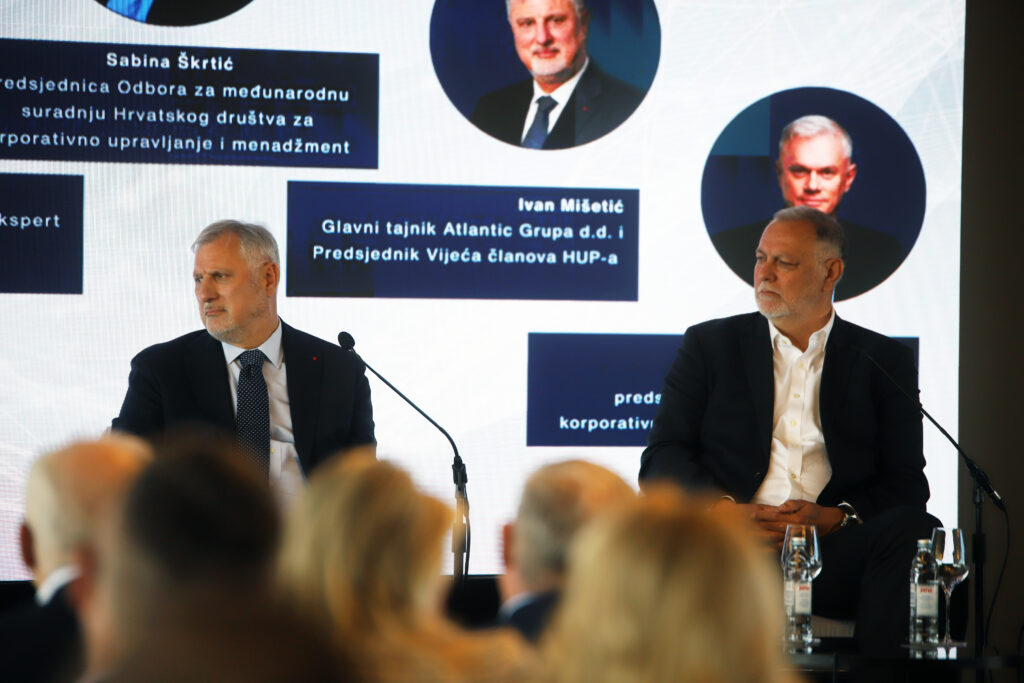
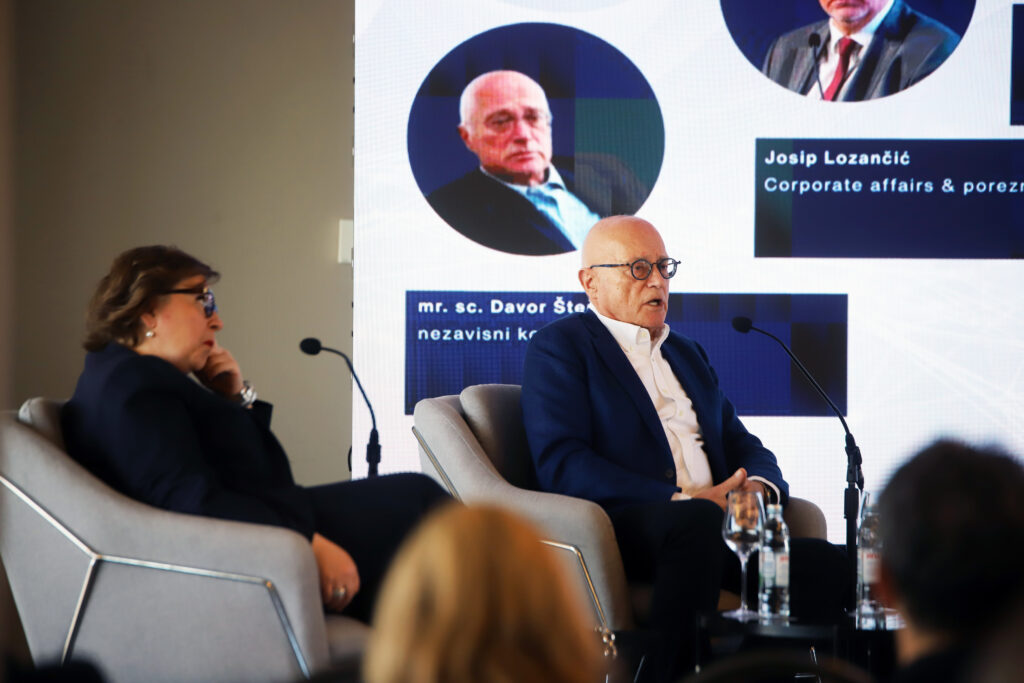
The panel discussion featured Sabina Škrtić, Davor Štern, Josip Lozančić, and Ivan Mišetić, moderated by Professor Darko Tipurić, Ph.D. The discussion addressed challenges related to regulatory pressure, geopolitical competition, and the energy transition, with particular emphasis on the strategic positioning of companies in conditions of accelerated and multi-layered change. Josip Lozančić stressed that regulatory transparency is a prerequisite for a level playing field and that tax transparency should be viewed as an opportunity to assess the impact of each law over time. Ivan Mišetić noted that some companies still react too late, waiting for regulations to arrive instead of interpreting early signals and, through business associations, consultations, and dialogue with the government, seeking solutions that satisfy all stakeholders. The business community must align its positions far more agilely.
It was highlighted that regulation is increasingly becoming an instrument of geopolitical influence, while the energy transition raises questions about balancing political objectives with market sustainability.
Sabina Škrtić emphasized that companies waiting for geopolitical stabilization are, in fact, waiting for something that may never occur, as instability is becoming a permanent rather than temporary feature of the global environment: “The time for observation is over! The time to institutionalize geopolitics and regulation within corporate governance begins now!” she stated.
Other participants agreed that the key difference between successful and less successful organizations lies in the quality of management, specifically in the ability to turn uncertainty into strategic advantage.
Davor Štern raised one of the most pressing questions of the discussion: whether the energy transition is a strategic necessity responding to real market and climate needs, or a politically imposed process whose full costs the economy has yet to bear. He also pointed to a paradox in European energy policy—while the United States and China maintain flexibility and strategic pragmatism, Europe risks weakening its competitive position through regulatory activism.
In conclusion, Professor Darko Tipurić, Ph.D emphasized that systematic management of uncertainty is becoming a core competency for management and supervisory boards, and that organizations that develop this capability can achieve sustainable competitive advantage in the long term.
The roundtable confirmed that the modern business environment is undergoing a permanent transformation under the influence of regulatory and geopolitical changes, and that competitive advantage no longer stems primarily from resources or technology, but from the quality of governance. Organizations that successfully recognize signals from their environment in a timely manner and translate them into coherent strategies will be in a position not only to adapt to change, but to actively shape it.