Conference “Challenges of Corporate Governance in State-Owned Enterprises: Between Accountability, Efficiency and Social Value”
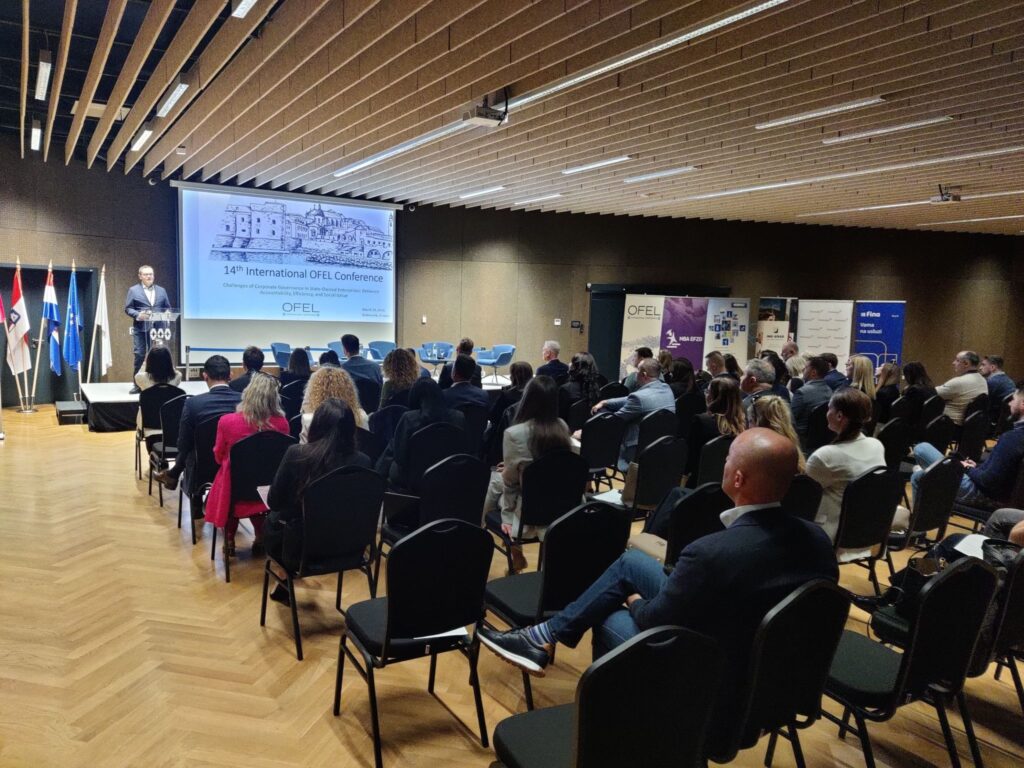
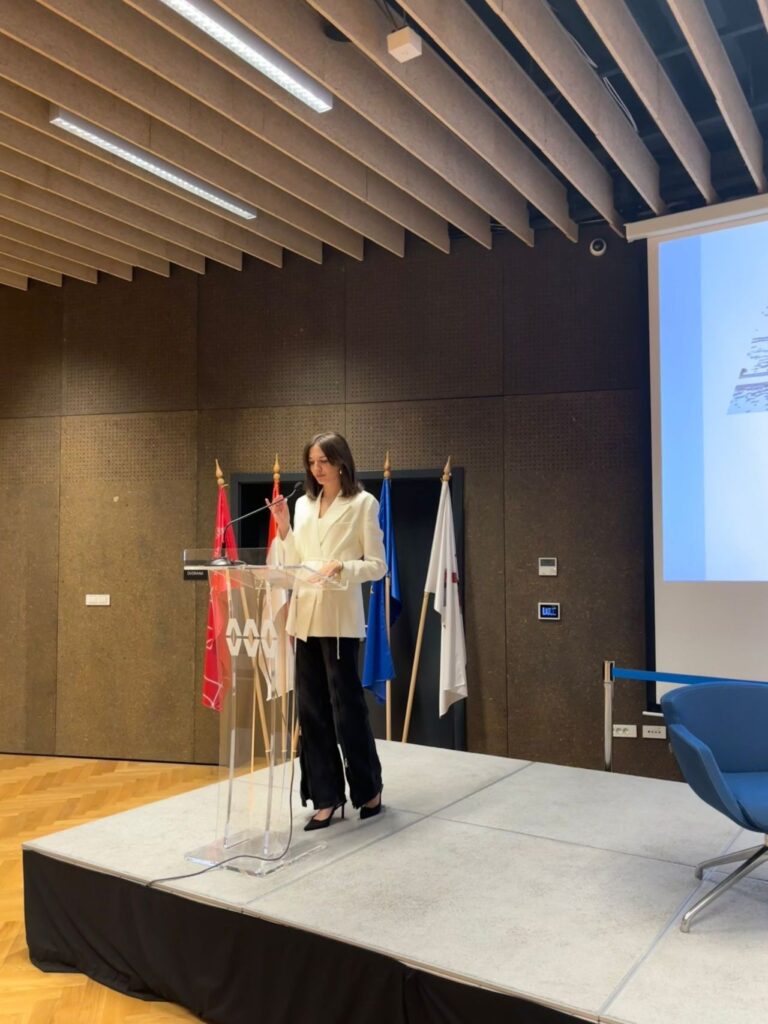
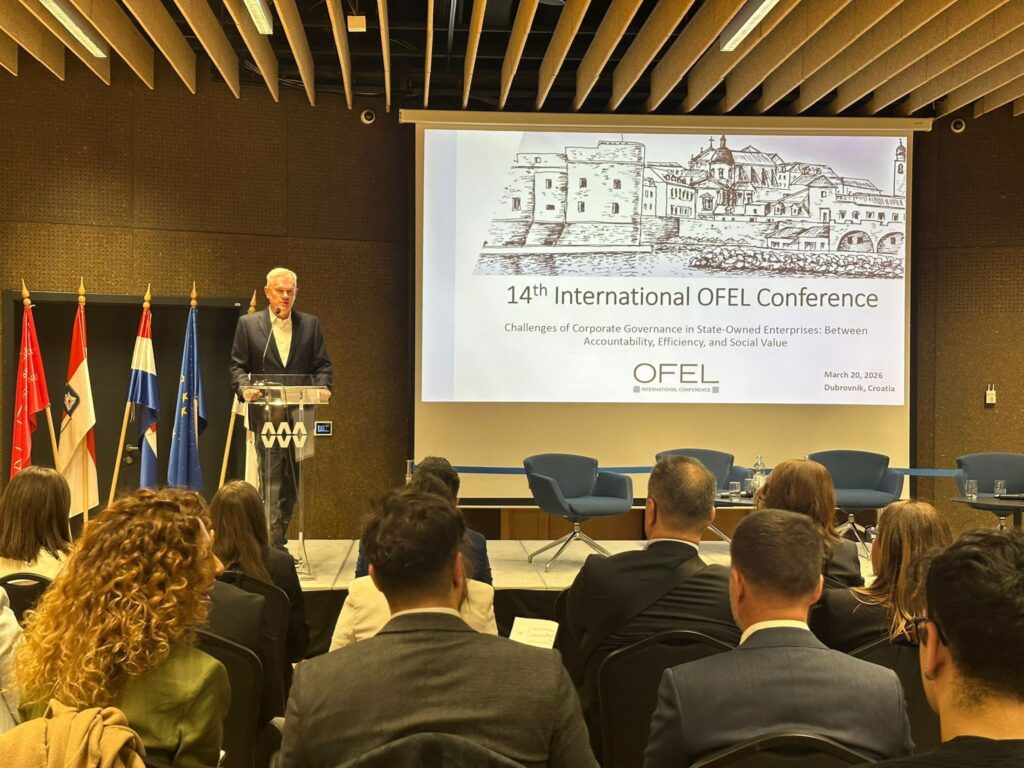
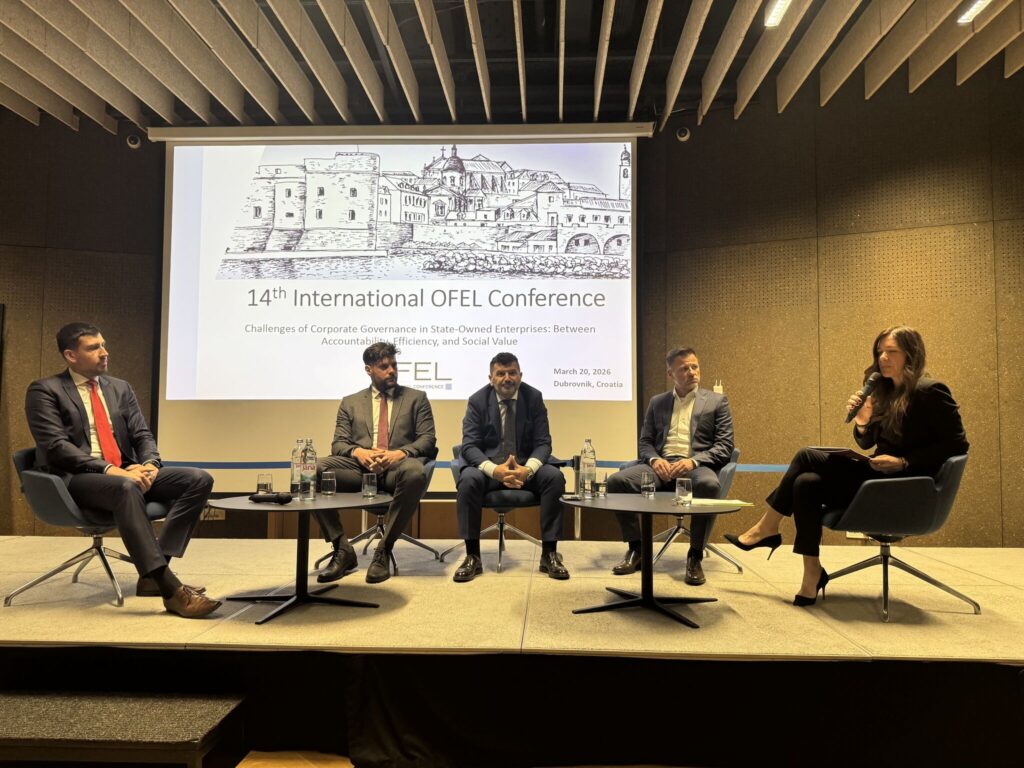
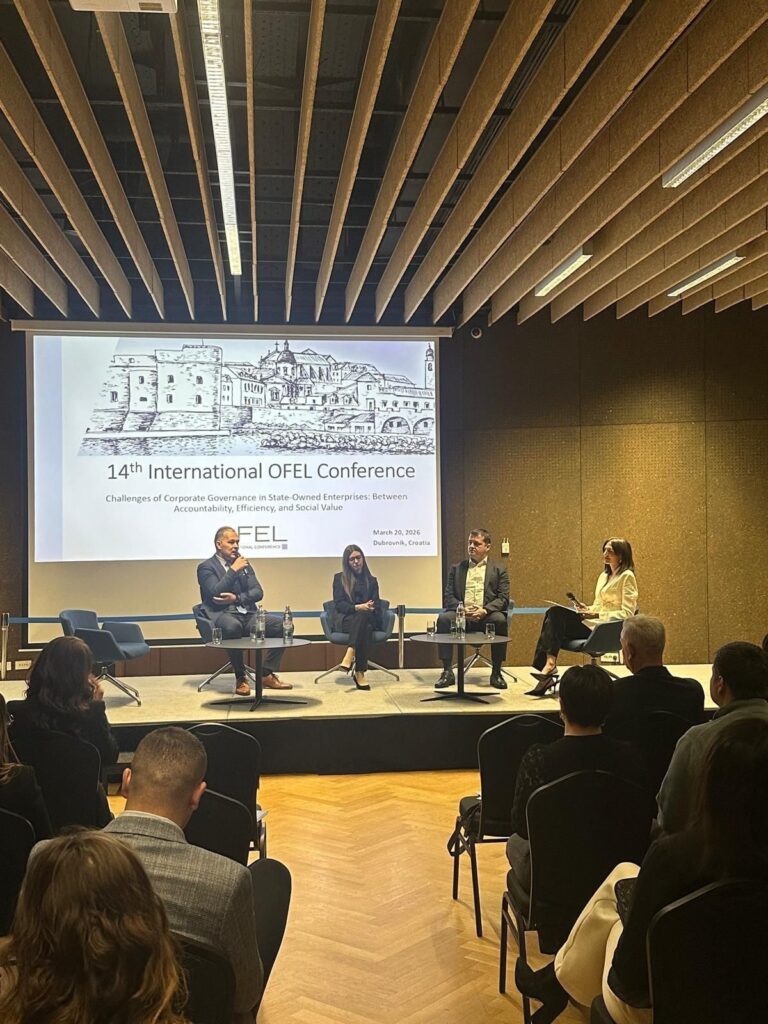
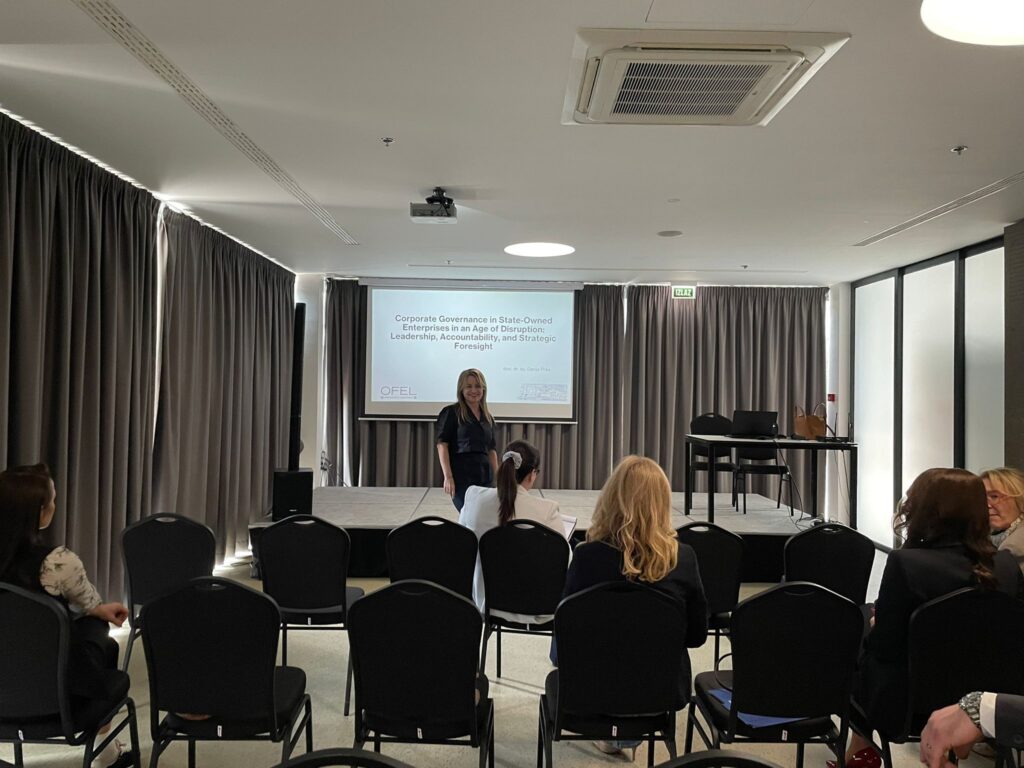
The conference “Challenges of Corporate Governance in State-Owned Enterprises: Between Accountability, Efficiency and Social Value” was held in Dubrovnik on March 20, 2026, organized by the Croatian Corporate Governance and Management Society and partner institutions.
A distinguished group of experts gathered across four thematic panels. In addition to the President of CCGM, Darko Tipurić, and the Rector of the University of Dubrovnik, Nebojša Stojčić, participants included Lana Lovrenčić Butković, Ivana Kovač, Lana Cindrić, Radoslav Barišić, Anita Bota, Anamarija Idžojtić, Davorko Obuljen, Sandro Viškanić, Dalibor Brnos, Karolina Kokot, Darija Prša, Zlatko Žuro, Gorki Bratim, Dinko Čondić, Dominik Skokandić, Ivan Augustin, Zoran Balkić, and Linardo Martinčević.
The discussions raised a number of key issues and encouraged deeper reflection on the actual state of governance practices in Croatia. Particular attention was given to the level of political influence on state-owned enterprises, as well as to mechanisms that can ensure genuine, rather than merely formal, accountability of management boards and supervisory boards. It was additionally emphasized that performance cannot be credibly assessed without clearly defined objectives and measurable, transparent criteria, with special focus on the challenge of balancing public interest and market-oriented business logic.
The program also included a discussion on the role of corporate governance in small and medium-sized enterprises (SMEs). Although they often lack developed formal structures, this segment holds significant potential for strengthening resilience, facilitating access to financing, and ensuring long-term business stability. It was highlighted that improving governance standards in SMEs has a broader, multiplicative effect on the competitiveness of the overall economy.
Within the panel dedicated to the construction sector, participants addressed specific challenges related to managing complex projects, risks, the regulatory environment, and relationships with public clients. The need for clearer delineation of responsibilities, a higher level of transparency, and a stronger institutional framework was emphasized in order to further enhance business efficiency and reliability.
Across all panels, particular emphasis was placed on the importance of Croatia’s accession to the OECD, which represents a strong incentive for raising governance standards. OECD principles were recognized as key guidelines for the professionalization of governance structures, greater business transparency, and the reduction of influence from informal centers of power. Such an approach was highlighted as one of the fundamental prerequisites for long-term stability and competitiveness of both state-owned and private enterprises.